Data Warehouse vs Data Lake vs Lakehouse: The Analytics Architecture Decision That Decides Whether Your Numbers Can Be Trusted
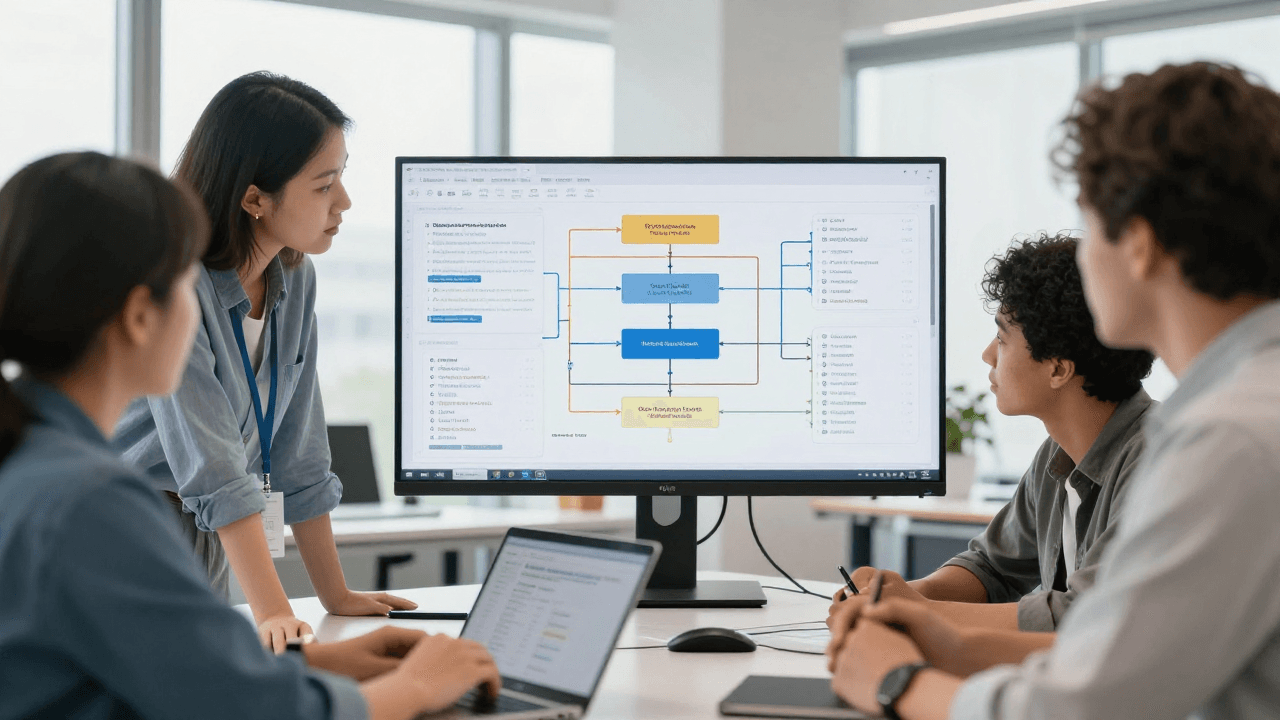
Your CFO asks a simple question in a Monday meeting: "How many active customers did we have last quarter?" Three dashboards return three different numbers, and nobody can say which one is right. The data exists. The architecture that turns it into a trusted answer does not. At AEGONTECH LLC, this is one of the most common conversations we have with CTOs and VPs of Engineering, and it almost always traces back to one decision: how analytical data is stored, modeled, and served.
This guide explains the data warehouse vs. data lake vs. lakehouse decision in plain terms, so you can choose an analytics architecture that your team can actually operate.
Key Takeaways
- A data warehouse stores structured, modeled data optimized for SQL analytics; a data lake stores raw files of any shape cheaply; a lakehouse layers warehouse-style tables and transactions on top of lake storage.
- Most companies under roughly 10 TB of analytical data are best served by a managed cloud warehouse, not a lake.
- Data quality and ownership, not storage technology, are the real reasons analytics projects fail.
- Separate your operational database from your analytics store early; running reports on production is a slow-motion outage.
- Treat data pipelines as production software: versioned, tested, monitored, and owned.
What is the difference between a data warehouse, a data lake, and a lakehouse?
A data warehouse is a database engineered for analytical queries over structured, cleaned data, while a data lake is low-cost object storage holding raw data in any format, and a lakehouse adds table formats and transactions on top of that storage so one copy of data serves both needs.
Think of it this way. A warehouse is a curated library: every book is cataloged, shelved, and easy to find, but someone had to do that work before it went in. A lake is a warehouse-sized storage unit: you can throw anything in cheaply, but finding and trusting something later takes effort. A lakehouse tries to give you the cheap storage of the second with the catalog of the first, using open table formats such as Apache Iceberg or Delta Lake.
Popular warehouse options include Snowflake, Google BigQuery, Amazon Redshift, and PostgreSQL-based analytical setups for smaller workloads. Lake storage typically means Amazon S3, Azure Data Lake Storage, or Google Cloud Storage, queried through engines such as Spark, Trino, or Athena.

Why do analytics projects fail even when the technology works?
Analytics projects mostly fail because of unclear ownership and untrusted numbers, not because of storage choice. Industry surveys regularly report that poor data quality costs organizations an average of roughly $12.9 million per year, and that a large share of data teams spend 40% or more of their time cleaning and reconciling data instead of analyzing it.
The pattern is familiar. Marketing defines a "customer" as anyone who signed up. Finance defines it as anyone who paid. Support defines it as anyone with an open contract. Each team builds its own pipeline, and each number is defensible and different. No amount of petabyte-scale storage fixes a definition problem.
A data platform without agreed definitions is just an expensive way to disagree faster.
Before choosing technology, write down the ten metrics your leadership team actually uses, assign one owner to each, and document exactly how each is calculated. This single exercise prevents more rework than any tooling decision.
When should you choose a data warehouse?
Choose a managed data warehouse when your data is mostly structured, your primary consumers are analysts and dashboards, and your team is smaller than a dedicated platform group. A warehouse gives you fast SQL, predictable governance, and minimal infrastructure to run.
For the majority of B2B software companies, this describes reality. Your data comes from a transactional database like PostgreSQL, a billing system, a CRM, and product event tracking. That is structured or semi-structured data that loads cleanly into a warehouse. Modern managed warehouses separate storage from compute, so you pay for queries when you run them rather than for idle servers, and a well-tuned setup commonly answers dashboard queries in seconds across hundreds of millions of rows.
The honest cost of a warehouse is modeling work. Raw tables must be shaped into reliable business entities, usually through a transformation layer such as dbt, which lets analysts write version-controlled SQL with automated tests. That work is the point, not a drawback: it is where trust gets built.
When does a data lake or lakehouse make sense?
A lake or lakehouse makes sense when you store large volumes of unstructured or semi-structured data, such as logs, images, audio, or machine learning training sets, or when your analytical data exceeds what is economical to keep in a warehouse.
Machine learning is the strongest driver. Training pipelines need raw files in bulk, and object storage costs a fraction of warehouse storage, often around $0.02 per GB per month versus several times that. If you are building AI features, as we did with the conversational and media pipelines behind Mimicall.app and Dolfy.ai, having raw data available and reproducible is genuinely valuable.
The risk is the "data swamp": a lake where files accumulate with no schema, no ownership, and no way to know what is current. Gartner has long estimated that a majority of data lake initiatives fail to deliver expected value for exactly this reason. A lakehouse reduces this risk by adding schemas, ACID transactions (guarantees that a write either fully succeeds or fully fails), and time travel to the stored tables, but it also adds operational complexity your team must be ready to own.
Warehouse vs. lake vs. lakehouse: how do they compare in practice?
The right comparison is operational, not theoretical. Here is how the three differ on the dimensions that decide real projects:
- Best for: Warehouse: BI dashboards and finance reporting. Lake: raw data, ML, archival. Lakehouse: mixed BI and ML on one copy of data.
- Time to first value: Warehouse: days to weeks. Lake: weeks. Lakehouse: weeks to months.
- Operational burden: Warehouse: low (managed). Lake: medium. Lakehouse: highest, unless you use a fully managed offering.
- Storage cost: Warehouse: highest per GB. Lake and lakehouse: lowest per GB.
- Governance: Warehouse: built in. Lake: you build it. Lakehouse: partly built in via the table format.
A practical rule we give clients: start with a warehouse, and add lake storage only when a specific workload, usually machine learning or high-volume logs, demonstrates it cannot live there. Starting with a lakehouse "to be future-proof" often means paying for flexibility you never use while delaying the dashboards leadership actually asked for.
How should you move data from production into analytics?
Move data with a pipeline that copies it out of your operational database continuously, rather than letting analysts query production directly. Running heavy reports on your primary database competes with customer traffic, and a single bad query can degrade or take down your application.
Two patterns dominate. ETL (extract, transform, load) cleans data before loading it. ELT (extract, load, transform) loads raw data first and transforms it inside the warehouse, which is now the default because warehouse compute is cheap and keeping raw data lets you reprocess when definitions change. For databases like PostgreSQL, change data capture (CDC) reads the database's transaction log and streams changes with seconds of delay and almost no load on production.
Whichever you choose, apply software engineering discipline:
- Version control every transformation.
- Test for nulls, duplicates, and referential integrity on every run.
- Monitor freshness, so a stalled pipeline alerts you before a stakeholder notices a stale dashboard.
- Document lineage, so anyone can trace a number back to its source.
This is where AEGONTECH's experience building Maximus IPTV Player and Dialable.world shaped our approach: usage events from real devices and calls are messy, arrive late, and arrive twice. Pipelines that assume clean, ordered input break within weeks.
What does a sensible first version look like?
At AEGONTECH, we scope a first version small: one managed warehouse, a handful of source connectors, a transformation layer with tests, and ten trusted metrics on one dashboard. It should be deliverable in four to eight weeks, not a year.
Resist the urge to model every table up front. Pick the three questions leadership asks most often, build exactly the data models needed to answer them reliably, and ship. Then expand based on real demand. Teams that try to build a "complete enterprise data platform" first frequently deliver nothing usable for two quarters, and by then the business questions have changed.
The best data architecture is the smallest one that your team will actually keep correct.
Budget for people as well as tools. A warehouse that nobody owns decays. Even a part-time analytics engineer responsible for definitions, tests, and pipeline health is worth more than a premium tool nobody maintains.
FAQ
Do we need a data lake if we plan to use AI? Not necessarily on day one. Many AI features, including retrieval and classification on business data, work fine from a warehouse plus object storage for files. Add a lake when you have large raw datasets for training or reprocessing.
Is a lakehouse just a rebranded warehouse? No. A lakehouse keeps data in open formats on cheap object storage and lets multiple engines read it, whereas a traditional warehouse stores data in its own proprietary format. The tradeoff is more operational responsibility.
How much does a first analytics platform cost? For a typical startup or mid-sized company, a managed warehouse, ingestion tooling, and a BI tool commonly run from a few hundred to a few thousand dollars per month, plus the engineering time to build and maintain it. Costs rise with query volume, so set budgets and alerts early.
Should we build this in-house or work with a partner? If you have a data engineer and a clear metric list, build in-house. If not, a partner can design the foundations and hand over a documented system your team can run. AEGONTECH regularly does exactly this.
Conclusion
Choosing between a warehouse, a lake, and a lakehouse is less about technology fashion and more about honest answers to three questions: who will use the data, what shape is it in, and who will keep it correct. For most organizations, a managed warehouse with disciplined pipelines gets trustworthy answers to leadership fastest, and a lake can be added later when a real workload demands it.
If you are weighing an analytics architecture, or inheriting one that three dashboards disagree about, the engineers at AEGONTECH LLC is happy to walk through your situation. Visit aegontech.dev to book a consultation and get a clear, practical recommendation before you commit budget.